
Opinion: Shifting Seasons
There’s been a lot going on in the world lately. It’s burning, both in a literal and metaphorical sense. There are escalating conflicts and natural catastrophes, and then there's us - and our snowboards. Our gateway vehicles from reality. A sentence that has been said and written so many times before that is yet to be written so many times more, as in its essence, it's true - or at least used to be.
It just takes one quick look at recent pictures surfacing from the Alps, of dirty and rough- looking glaciers or of excavators eroding whatever is left of those once magnificent structures for the sole purpose of a ski race that will take place on a single white slope surrounded by green grass and the careless bliss experienced when strapped in during the early autumn months is corrupted by a rather harsh reality.
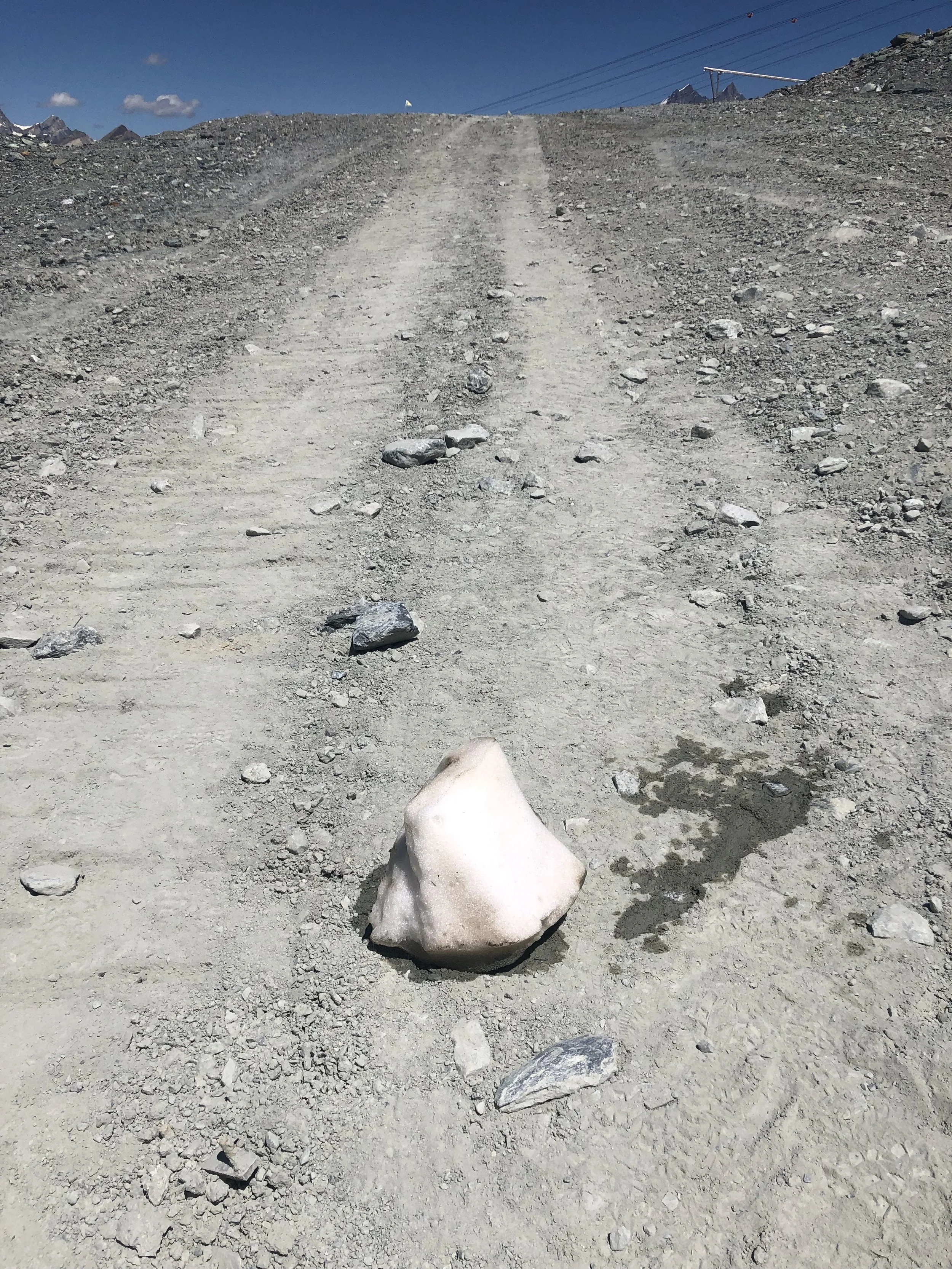
Photo Amon Eisenmann
After being confronted with a hot and dry autumn season, the question emerged whether glacier snowboarding in the autumn months was still a reasonable way to kick off the snowboard season. Hence, in this piece, I’ll explore some of my thoughts and findings on the topic.
According to a study conducted by researchers at the University of Innsbruck, neither the activity of snowboarding on glaciers nor maintaining lift operations contributes significantly to their rapid disappearance. Movements on the glacier’s surface clear snow and enhance the density of the snowpack, which has a stabilizing effect. In addition to that, covering up glaciers during the summer months reduces their melt by 60%. While all this may sound quite promising in the first place, what is problematic, though, are the usual suspects connected to winter sports. Commuting, operation of lifts, snowcats, and other infrastructure are resource-intensive proceedings, so is covering them up for the summer. We won’t get into the alteration of rock formations and erosion of glacier ice for the sake of creating new infrastructure here, as these are reprehensible to an extent, I hope I don’t have to explain.
As long as what happens happens on the actual glacier using existing infrastructure, it can be argued that glacier boarding doesn’t necessarily surpass the evils connected to using ski resorts during their usual operational periods by a long shot. What is important to keep in mind, though, is that we should at all costs try to minimize our impact through commuting and the usage of said infrastructure. Gang up, share a ride, or use public transport.
While the activity of off-season snowboarding itself may not be as harmful as one might expect, what it harms is our reputation. Viral clips of people riding down literal waterslides in the middle of yet another heatwave just don't look too good to people who are not into snow-dependent activities. Neither do medially celebrated openings on scraped-together slopes next to patches of grass that needed to happen because a racing calendar put together by the big bad skiing corporation, which also governs the snowboard contest circuit, said so. Pictures and videos surfacing from occurrences like these create narratives that may not look the most sensible to the outside world. Outside of our bubble, people associate winter sports with actual winter, meaning hills covered in snow. Seeing someone charging down slopes that greatly contrast their surroundings usually leaves them puzzled and irritated, unable to comprehend the perceived irresponsibility and insensibility of the pictured actors. While the aforementioned may be examples of blunders of our french-fried counterparts, we are just as dependent on the survival of our industry and the continuing existence of lifts pulling us uphill as they are, which is why the narratives we create through our actions and what we share are something that should be kept in mind.
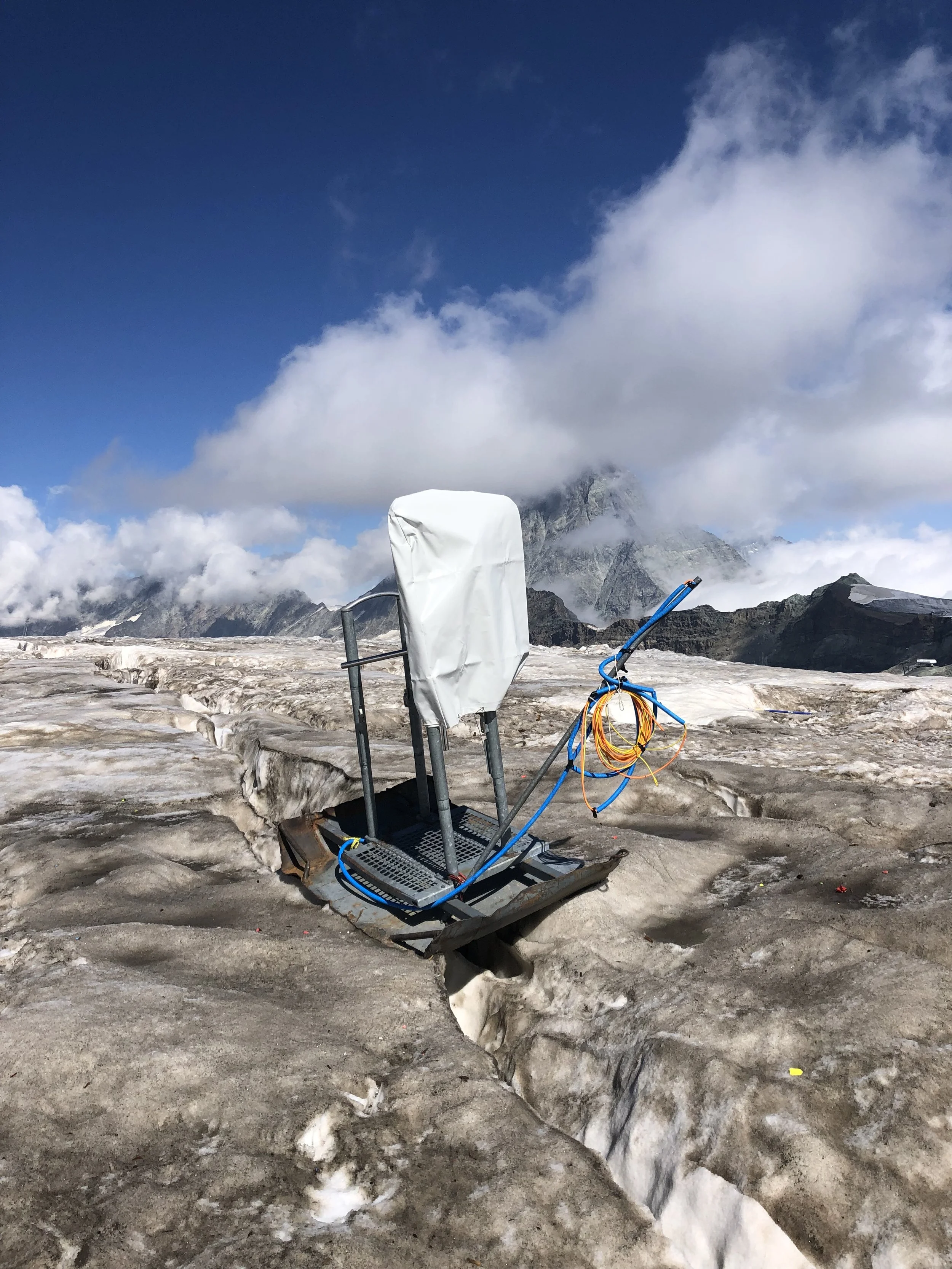
Photo Amon Eisenmann
For decades, the major glacier openings in Austria have been taking place in the first few weeks of October. For decades, this was not a problem at all. They were large-scale celebrations of another winter season to come, where everyone came together in a happy manner. Unfortunately, this is no longer the case. While openings are still guaranteed to be fun when attended, the events themselves are quite visibly holding on for dear life, hoarding snow, and then scraping together whatever is left after another long, hot summer. Attending several openings over the last couple of seasons has always brought me the not entirely unexpected yet joyful realization that snowboarding is still the most fun thing in the world. Yet, there was also the saddening sight of puddles, rocks, and glacier ice no longer covered by snow, which was a lot more present than I wished it was.
As a consequence of these sights, some have, after multiple years of near cancellation and rescheduling, finally had the realization that seasons for a fact are shifting and rescheduled their events. By doing so, the snow guarantee goes up significantly, and various uncertainties are reduced. What may come with this rescheduling, though, are issues with sponsors and their product cycles, but getting into that would exceed the limits of this text. It may be an interesting topic to think about, nevertheless.
Seasons are shifting, summers are becoming longer and warmer, leading to a later beginning of the winter season. Potential negative impacts are rather clear, while the activity itself may not be as harmful as expected. Whether it is reasonable to snowboard on glaciers in the autumn months ultimately is up to every individual to decide. What is important to keep in mind is to minimize impacts wherever we can, while considering that what we are doing might not seem reasonable at all to some. While snowboarding still is all about fun and flow and getting away from it all, we no longer live in a world where putting aside reality entirely for the sake of a couple of turns is feasible.
Text Alex Taferner
Photos Amon Eisenmann
This article was originally published in Pleasure #148. For the complete reading experience, with more photos and the unmatched feel of a print magazine, order your copy of the magazine below or, even better, support print by becoming a subscriber!