

Railjams Are Going Olympic (Maybe) Here's what you need to know
It is true, railjams have officially entered the FIS-sanctioned competitive landscape. Although this happened quietly, the 2024 Rock a Rail tour stop in The Hague was the first-ever rail jam classified as a FIS European Cup. What this means is that the railjam format well-beloved in the core scene has become a part of the larger competitive apparatus, and that Olympic glory could eventually be on the horizon even for us airtime-averse jib kids. The discipline, as FIS puts it, is called FIS Street Style (formerly Rails) and described as an "event growing in the FIS structure in the upcoming years", with them currently working on establishing "World Cup-level competition". Looking at the setup at their recent season opener event in Antwerp, it's looks like they haven't quite nailed the entry-level section yet.
Railjams becoming a part of the competitive landscape has sparked a lot of chatter, with pros like Jill Perkins and Pat Fava taking a stand, causing their comment sections to go wild. Mid-season railjams - easy money to fuel passion projects, or a death blow to the core values reflected in videoparts?
Looking for answers, we went straight to the source. To clear up some of the confusion and talk to someone who actually knows what they are doing in the field, we decided to speak with Martijn Oostdijk (FIS Park & Pipe), who has been a part of the railjam circuit for quite a while and is one of the driving forces in the professionalization of a format once best known for its riders’ semi-sober shenanigans and legendary afterparties.

Rendering for the upcoming European Cup in Riga, Latvia / Image: FIS
Hello Martijn! You are listed as the Park & Pipe Continental Cup coordinator on the FIS website. Would you be down to share some insights about that role?
The Continental Cup system is a competition system just below the World Cup events. This is an important series of events because it's providing a part of the pathway feeding into the World Cup events, and from there into World Championships and the Winter Olympics.
So that means that with the Continental Cups, we’re trying to get the riders ready for their next step, to their highest level. Usually in Continental Cup fields it's upcoming athletes competing, but sometimes, it’s also for World Cup athletes. They will come back to the Continental Cups to build their points back up or come back from injury, and then move back up to the highest level again. We try to do our best to make this step nice and easy and feasible for athletes.
Last year a press release was issued declaring Rock A Rail at the Hague to be the first European Cup in the Rail discipline. Could you give us some insights into how that came about?
Well, as we all know, there might be a few questions wondering whether FIS is the right party to go into Rails. We explored it very carefully: Should we do this? Is this beneficial for the sport? Is this beneficial for the athletes? Or should we just leave it to independent events? Because there is already quite a strong scene and great events in rail competitions, so then why would FIS get involved?
And there's actually a couple of reasons for this. The main reason is that it was very hard for athletes to come into the rail competition system, unless you're already sponsored, or you have video parts and whatnot. Then you get invited. So, what we’re trying to do now is to create a pathway for these athletes so that they can start in their own country and then they can make the next steps to higher level competitions.
For example, in the Netherlands, a land without snow or mountains, the kids get to know competitive snowboarding through rail events. With the FIS pathway, they can start at lower-level events, build up their experience and points, and they eventually also compete at a higher level, such as a national event or an international event. And there's also the outlook towards a European Cup in their own country with their own friends and family around them.
The other thing is that, like it or not, for Rock A Rail and quite a few other organizers, having an international body behind it just creates more funding. If you go to a city or local government, and you say, “I want to do a snowboarding thing with my friends,” that’s great, but it’s a whole different thing if you can say, “We’re putting on an international event, it’s part of the pathway to a higher level, and the international federation sanctions it.”
So, it helps organizers. But of course we try to stay as true as possible to and as close as possible to the community. It is key that everybody [at FIS] understands that it’s a different group of people we’re working with at rail events - it's not just slopestyle athletes that compete in these events. There are so many nations. I mean, we have more than 20 nations now organizing Street Style events and half of them don't have mountains. But now the riders from those countries can excel, they can train, they can perform, and have high-level events to compete at. Sorry…I’m a bit enthusiastic.
So first it was called FIS Rails and now it's Street Style. And how did that come about?
There were some discussions beforehand, some feedback, and some different opinions. We started with Rails, and then we found it doesn't quite cover the event we're pulling off, because we're not only riding rails. There are also wallrides and different jibbing obstacles and whatnot.
The other thing is that it is not just a Slopestyle competition without jumps. It's a totally different environment. The judges and judging are different. And it's a different target group. It's different people competing and watching. So, to stay as close as possible to the true nature of the sport, it should be like an urban-based street-style environment.
We thought about just calling it Street, but then it's not only in the streets. You can have great events at the base of the resort too. But it should be urban-style setups, unlike the regular rails we have in a slopestyle course.
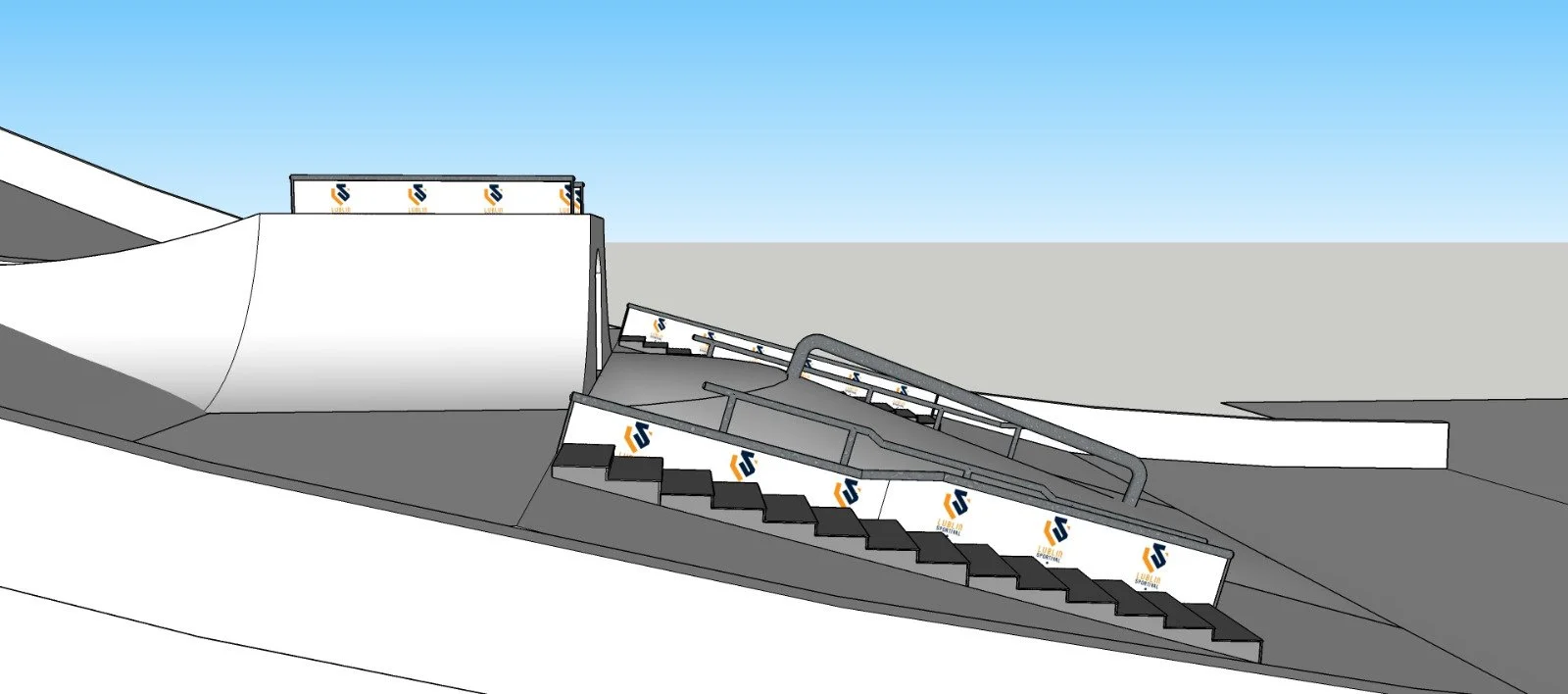
Setup for the EC in Szczyrk, Poland (March 2025) / Image: FIS
So, since the Hague last year, a bunch of events have already taken place. How have the responses been so far?
The feedback has been, of course, quite skeptical at the beginning. I think the first post about it on Instagram was a couple of years ago, and there was quite a bit of hate and whatnot. But what we’ve noticed is that as time has gone on, it is changing.
What we’ve seen at the first event in The Hague was some jokes. Wouter [Groot] was wearing an alpine ski helmet. Great. Love it. And there were a couple of people who were handing out stickers that said “FIS – F*ck I’m Sober”. That’s fine, you know. At least not F*CK FIS anymore. So that's good.
We figured out that it's very important to stay as true to the community and the culture as possible, but there are a couple of things that we cannot do. We cannot allow riding without a helmet. And, if we go to a very high level, at some point, people may have to pee in a cup. Anti-doping would become a factor.
The only thing we try to do is good competitions. They need to be safe, they need to be fair, and they need to be of a certain standard. Within that frame, we listen to all the feedback and we are actively looking to engage the people who are against it to have this conversation and to make sure that we accommodate everybody's needs.
The feedback is changing in a way that people are starting to get a sense of us trying to do the right thing, trying to stay true to this community, and make sure we don't steer away from that. This is the base and even if we're called FIS, I mean, we're all riders. The people who are concerned about Park & Pipe, we come from snowboarding. The passion for our sports is why we do this.
The goal is to reach a World Cup level of competition over the next couple of years. How is that going to look?
Once again, it‘s one of these steps we've been thinking about and asking ourselves, should we do this? Because we see the pathway is already working. If we were to have a World Cup now, looking at the quota, people from the Netherlands, Belgium, and the UAE would be included, as they're running a program in Dubai. The other thing is that if we do World Cups, we have visibility because it’s obligatory for them to be live on TV. Also, prize money. We bring the highest level of riders, and they will perform. Now, the winner of one World Cup gets 13,000 CHF. There is a mandatory prize money of 35,000 CHF for both men and women, and the top 10 get prize money.
Well, so the obvious question is, is this all possibly going to lead into the Olympics?
Yeah, that's of course a regular next question. We've been discussing this quite a bit. Our official opinion is that we have Halfpipe, Slopestyle and Big Air and this is the base. For Street Style to get into the Olympics, it’s up to the IOC - it’s their event, it’s not our event. We don’t have much to say about it that decision, but we can suggest it, and if they decide they want Street Style in the Games then they will take over and we’ll work with them to make it as good as it can be. We would like to keep the Halfpipe, Slopestyle, and Big Air events and not have Street Style as a replacement for any of the events, but as an add-on.
So if IOC says we want to do this, then of course we'll accept, we'll organize together with them a great Street Style event, but only if it doesn’t take the place of any of the other events. That's not what we're pushing for at the moment because otherwise we'll push other athletes out by trying to get in a new group, which doesn't really make sense. I can tell you that the IOC knows about Street Style and is not not interested.
But we’re not talking about it going the Olympic program anytime soon. I mean, it's not going to be in the 2026 Olympics, it's not going to be in the 2030 Olympics. The earliest possibility would be 2034, if at all, because all the other contracts are already signed.
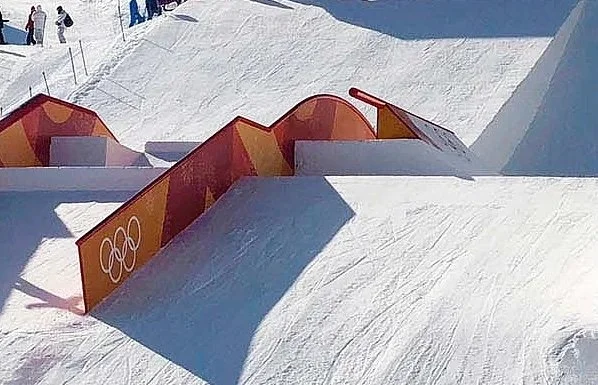
Pyeongchang Olympic Slopestyle Course 2018 / Image: Schneestern
It's funny because it's like when this whole chatter started, it was like, yeah, rail jams are going to be Olympic like now. And it's obviously not that, but it's very good talking to you and getting some clarification on all that. How will all this, this whole professionalization of all the events, be affecting the judging criteria?
The judging criteria are actually based on riders‘ input. It's the riders’ sport, so that's who we have to listen to the most. We just had a judging clinic last week in Landgraaf with a lot of judges in the room and most of them are riders as well. Jam sessions are a big thing, right? The jam format is an integral part of Street Style riding, obviously. So this is what we have to keep.
That means it's a lot of work for the judges because obviously, this is a different system than we use for Halfpipe, Slopestyle and Big Air. And this is one of the major characteristics of street style riding that we have to maintain. So this is what we've been working on - qualifications at all levels of events would be jam sessions, no matter how many people. You have jam sessions of around 10 people per heat to keep it possible to judge them.
For high-level events, we have tested a head-to-head format, which is also going to be used at European Cup events, with the reasoning behind it being that a head-to-head format is something that we can explain to the public. It makes things a lot easier to understand. If we do a jam session in finals, it's a great show, but as a competition, it's really hard to follow.
So we're doing jam sessions first, but at the end, the best eight will proceed to finals, and this is a watchable, followable, great show in a head-to-head format, where the final standings are defined by direct battles, and everybody gets two runs per round.
So, things from the past, like best style or hardest bail, and all that - that's gone in this form of competition?
I wouldn't say so, because obviously, what we do, we do this whole system, but of course encourage organizers to have such extra prizes. The organizer can still put up a best trick prize, for example.
If you look at Rock A Rail, there are still sponsors rewarding the best trick or the best style, and this could easily be implemented in all of our FIS events also. We actually see this at some World Cup events already. So that wouldn't change. Those prizes would just be an extra opportunity for the organizers to have activations of their own. I think we still had it at Rock A Rail in the Hague last year, which was also a FIS sanctioned event.
A big part of rail jams is the vibe, which often comes from locals and their entourage rather than someone who is already an established professional and traveling on the competition circuit, so I was wondering to what extent locals will still be able to participate in all these events?
There are a couple of sides to this, because obviously, if there's a national event on a FIS level, then everybody who wants to compete can do so. Logically, most of the competitors are local. If we look at the next level, which is the Continental Cup, everybody can enter, but they still have to qualify. I mean, you have to be good enough, but obviously it's open; entry is open, qualification is open for all the locals who want to participate.
At a World Cup, it would be a little different, but the quota we put in place for host nations would handle that, because it only makes sense for an organizer to host events if they have local athletes competing. The host nation quota means that out of the 30 men and 30 women, which would be the idea to start with, and two men and two women of the host nation quota can be assigned entry by the nation.
Will it be necessary to sign up for the Continental Cup or obtain approval from national federations to participate in all this?
Yeah, well, at the moment, you need a FIS license to compete at FIS events. It’s nothing more than signing up for these events and completing some administrative tasks, as well as the athlete’s declaration. The national federation has to sign you up because maybe in your country, you've done something that we don't know or that the organizer doesn't know, which would lead to you not having such a license. There's a little bit of control from the national federation, but generally it's open for everybody.
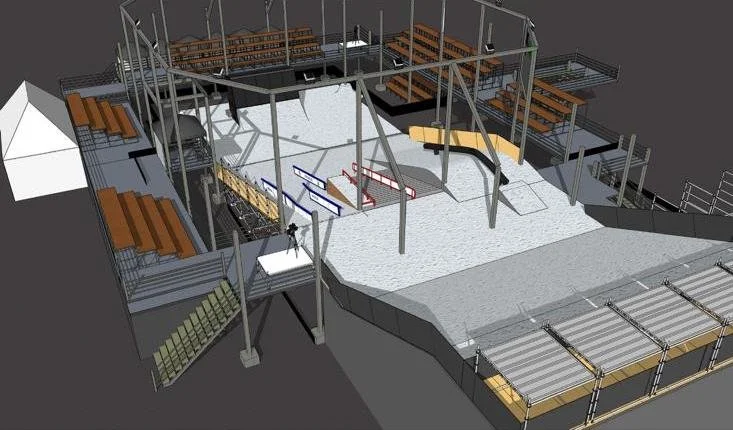
Stadium Vibes at Riga EC / Image: FIS
So, as long as they get themselves a license, it's possible to see super loose jibbers participating in these events alongside someone that usually would be gunning for the Olympics?
That's the goal, absolutely. That's exactly what we're trying to achieve. To make sure that there's a place for everyone, including for the real jibbers. We try to create better circumstances by adding higher-level events, more visibility, and in a while, some more income to make sure they can pursue their careers and their dreams and our sports. So, the more the better.
This all sounds like national teams are probably also going to be a thing in the future. Does that mean uniforms might become a thing at some point as well?
Well, what we see now in all of our other events is that the uniforms are mostly only there at the Olympics. There are a couple of nations that have uniforms on the World Cup, but that’s up to the nations, that’s not for us to decide. I hope the nations give their riders as much freedom as they desire.
You've obviously seen your fair share of pretty wild events go down throughout your years of experience. Do you have a fear in you of the whole thing getting too competitive?
I think that's one of the things we would really have to take care of. I mean, Street Style is different than Slopestyle, Halfpipe, or Big Air. We have to make sure it keeps its own identity. Especially in snowboarding, a lot of people coming from other sports are very surprised that we have such a good vibe, and it's the same when I'm running all these Continental Cups. There are always good vibes at the start. People are helping each other out and cheering each other on, and everybody's good friends.
This is a critical value that we need to keep. But we need to do this as a community - us as organizers, us as the international federation, you guys as riders, the judges, the organizers of events themselves. This is an important part that we have to take care of as a group, I would say. We’re all trying to achieve the same goal, and it's good to have all the input and everybody on the same table. Only then we can achieve better goals, for the sport and of course the riders, which is essential.
What is your vision for the future of the street style format right now?
To have as many nations as possible compete in these events and share their passion with other people from around the world for a lifetime of snowboarding.