

This is a theoretical treatise on what micro snowboarding means to us. Its existence is to remind us, as snowboarders, that snowboarding was invented first and foremost for pursuing fun. We are meant to play. To understand the philosophy of micro, you need to understand that truth is multifaceted. We will be exploring how micro relates to our truth through three realms: mind, body, and soul. The goal is not to persuade you, but simply to expose you. Let your mind, body, and soul guide you on this literary journey.
Words by Will Fraser & Dan Zimmerman
With contributions from Kurtis Rothecker
Photos by Dale Bailey
Mind
For years, snowboarding minds have wrestled with complex problems. In some ways, progression depends on increasing complexity. However, as the spins and features have grown, maybe we have lost sight of something. The creative problem of what to do on a feature, and how to see features that nobody else would look at.
Taking inspiration from groups like Think Thank and The Yawgoons, micro explores where snowboarding can go if we expand the possibilities by shrinking the feature. A curb, a rock, a patch of snow, the flat ground. For example, a stack of logs, unlike a handrail, has no clear trick selection to it. The idea is to work it out, jump on them, move them around, ask questions. Should I hop up three times and then 270 off? Or should I jump up, 180 pivot and indy back over them?
This creative questioning is core to micro, but it’s also pragmatic. As responsibilities pile up, it becomes harder to justify snowboarding, so micro explores how snowboarding can change as we age. How can we get the trick high without completely uprooting our day, quitting our job every winter, or firing up our nervous system with anxiety about disappointing ourselves or our parents?
One of the co-founders of micro, Dan Zimmerman, talks specifically about this, sharing how micro impacted his relationship to snowboarding.
Dan Zimmerman
Years snowboarding: 25
Favourite Trick: Kindgrind
“Micro arrived during a period of not snowboarding. I was in my 30s, pursuing stability, a career, and safety. Eventually, the base of Maslow’s hierarchy was being met, and I wanted to move again towards life-giving enjoyment. I loved trying to play the snowboard game as a kid. The crew I found at a younger age never quite elevated beyond regional status, but looking back, none of that matters. What matters is that we found our own subreddit within snowboarding. But when we couldn’t make a living from it, we had to move on. So, what do other washed-up athletes do? They play beer league. I’m not saying micro is beer league, but it might be the snowboard equivalent. I don’t want to join a running club. I want to shovel and set up spots with friends I’ve known for decades, sharing a common language and easy familiarity. I’m not looking for friction. I’m looking for a release. I’m looking for a very specific feeling that usually comes from snowboarding on infrastructure in an urban environment not originally designed for snowboarding. I also love the mental challenge of filming and creating something new.”
There are many ways micro can engage the mind, depending on who you are. At its core, it’s about experimenting and looking at things differently. For Dan, that mental challenge extends into filming and creating something new with friends, while still getting exercise and being outside.
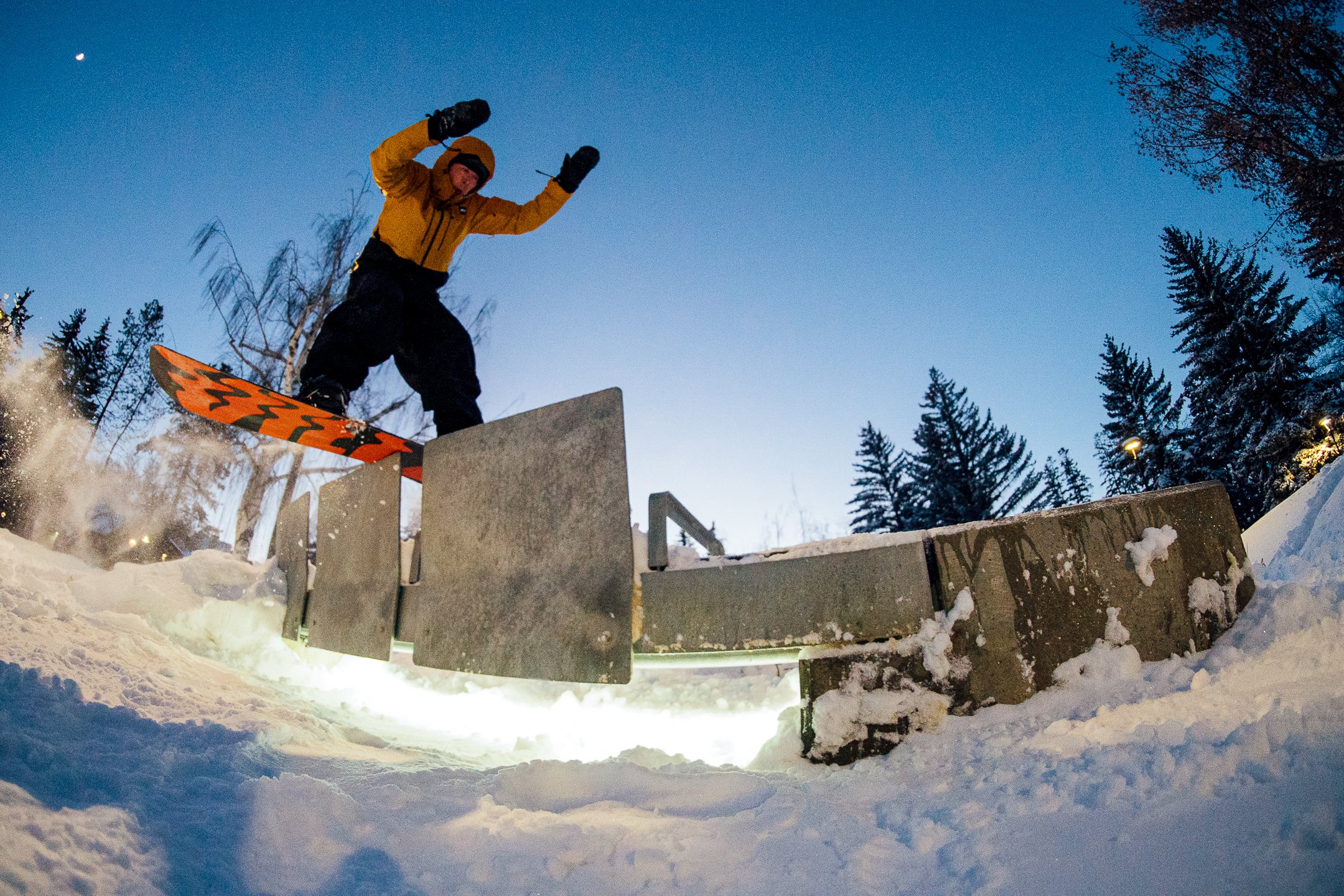
Dan Zimmerman // p: Dale Bailey
Body
The body is the most outward-facing domain. It’s the medium we use to get tricks. At times it works with the mind and at other times against it, but it’s always there when we need to throw it down something.
One of the co-founders of micro, Will Fraser, talks more about this, contextualizing micro in the domain of body and physical injury.
Will Fraser
Years Snowboarding: 22
Favourite Trick: Switch Back Nosepress
“I’m going to gap backtail on a flat down. The snow is hard. The sun is out. I feel jockishly confident. To get speed, I skip the first feature and pop off the lip of the second. I land in backtail, only for a moment, then catch my heel edge. This throws me backward into the air. I explode on impact, obliterating my hip and smacking my head on the hardpack. “I’m good. I’m good,” I say. But I can barely walk. Pure adrenaline gets me to my car. Driving home, one buttcheek is on the seat, and the other is suspended in the air like I’m farting. When I get home, I look for medication in the cabinet to help with the pain, and pass out while on the phone with my mom. She calls an ambulance. I wish that was the end. A couple of weeks later, I hit my head again. The doctor explained that when you return to sport too soon, your brain can still be sensitive to impact. My second hit was mild, yet resulted in a concussion. The post-concussive symptoms lasted for months, and the anxiety around falling on a snowboard has never really left. That’s the body that built micro. A fleshy and impermanent collection of tissue and fluid, with a back leg that is stronger than its front. A body with tight IT bands from years of riding +15 and -12. A body with scars on its shins from tacoing, a rib that sticks out a little from over-rotating a 900, and a brain with fewer neurons than before.”
Micro came from a body that still has snowboarding in it and can't let it go, despite every evolutionary reason to stop. It's stupid, but it's true. You adapt, or you die, the cliché goes. So we adapted. We went smaller to be more sustainable. Micro’s barrier to entry is low enough that, ideally, you can do it for a long time.
Just for a second, imagine if – insert pro from your generation – came back riding smaller, interesting features. They’d hopefully be stoked to be back doing what they like. With smaller features, you don't have to quit or go into the backcountry. You can keep getting street clips as you age.
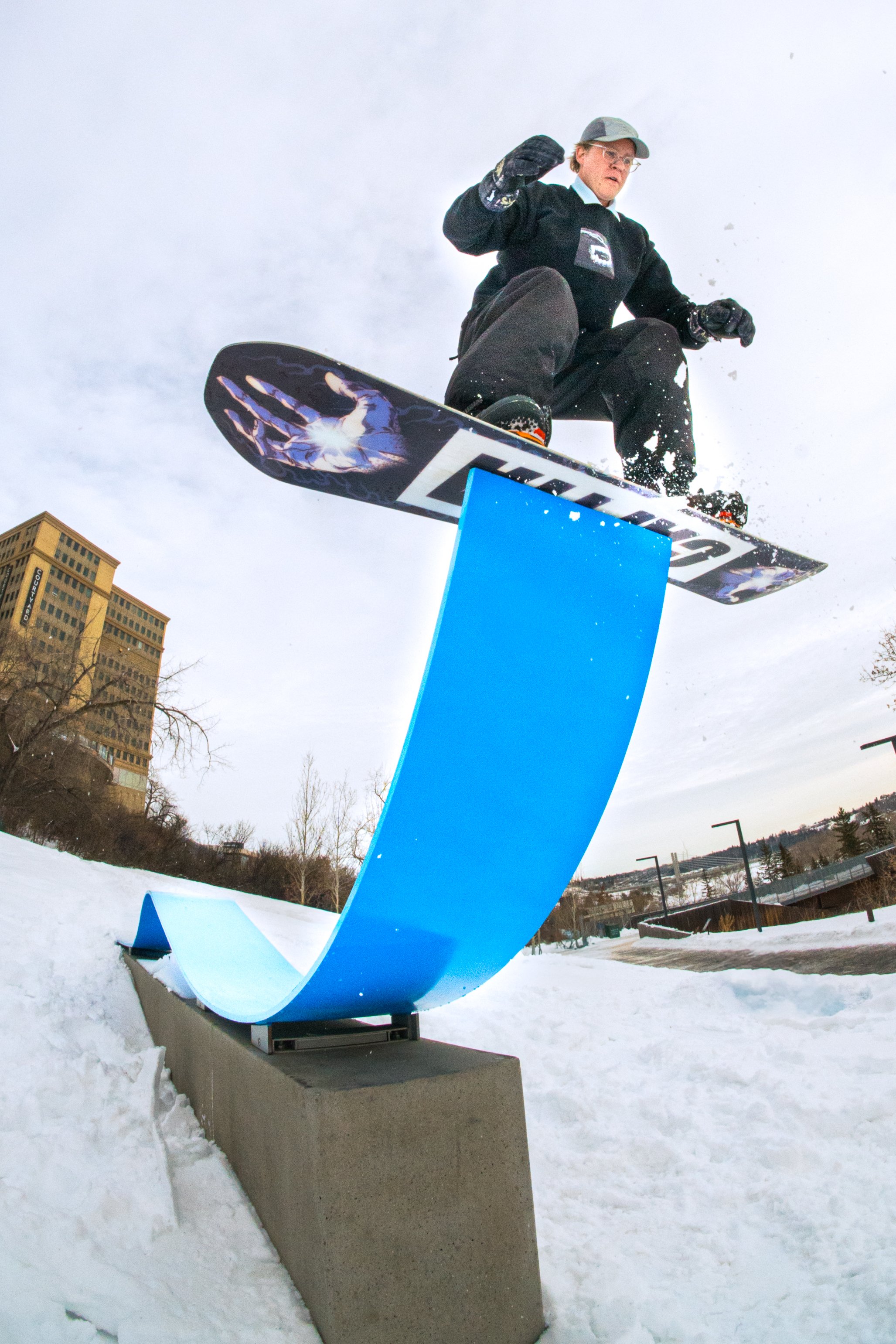
Will Fraser // p: Dale Bailey
Soul
To explain the soul, we’ll start with a poem, because sometimes poetry can talk about being alive better than prose can. In Henry Wadsworth Longfellow's A Psalm of Life, he argues that life isn't something happening to us. It's something we're invited to participate in.
Tell me not, in mournful numbers,
Life is but an empty dream!
For the soul is dead that slumbers,
And things are not what they seem.
Life is real! Life is earnest!
And the grave is not its goal;
Dust thou art, to dust returnest,
Was not spoken of the soul.
This is how micro feels to us. Not because riding a curb is a profound spiritual act, but because there's something innate in wanting to do it. A soul's desire. When you start snowboarding, you start without truly knowing it. The fence around it isn't built yet. You ride because you're pulled toward it, because life is "but an empty dream" full of possibility.
Then expectation shows up. Am I even good enough to do this? Am I spending too much time on it? Should I grow up and stop hitting handrails at 31?
Kurtis Rothecker, a longtime micro contributor, put it well:
Kurtis Rothecker
Years Snowboarding: 28
Favourite Trick: Frontboard
“Now I work all year as a letter carrier and am focused more on music in my spare time, but the snowboard brain never really turns off completely. It's nice to still be able to nurture it, and the micro approach makes that possible, especially living in the prairies where there aren't a lot of hills or large features.”
That's the ethos. We film everything, nurture the snowboard side of ourselves, and try to leave the judgment at home. We use what we have, then figure out what it is later, in the editing room. It's probably not how you're supposed to make a snowboard project. There is no budget and little to no guarantee that anyone will care. We've made -$100 off micro. But there's satisfaction in shoveling a spot with your friends, trying something creative/stupid, filming it, and seeing what comes out the other side.
In the end, we're just trying to be honest and authentic, because this path has been so enjoyable. The pressures and insecurities of taking snowboarding seriously, included. The highs and lows are what we needed to arrive at this place with real appreciation.
We hope this treatise is an entrance for you. Micro 101. Take what speaks to your mind, body, and soul, experiment to see what sticks, and discard the rest. What's true now might not be true in the future, and that’s okay too. We hope you’ll share with us what you get up to
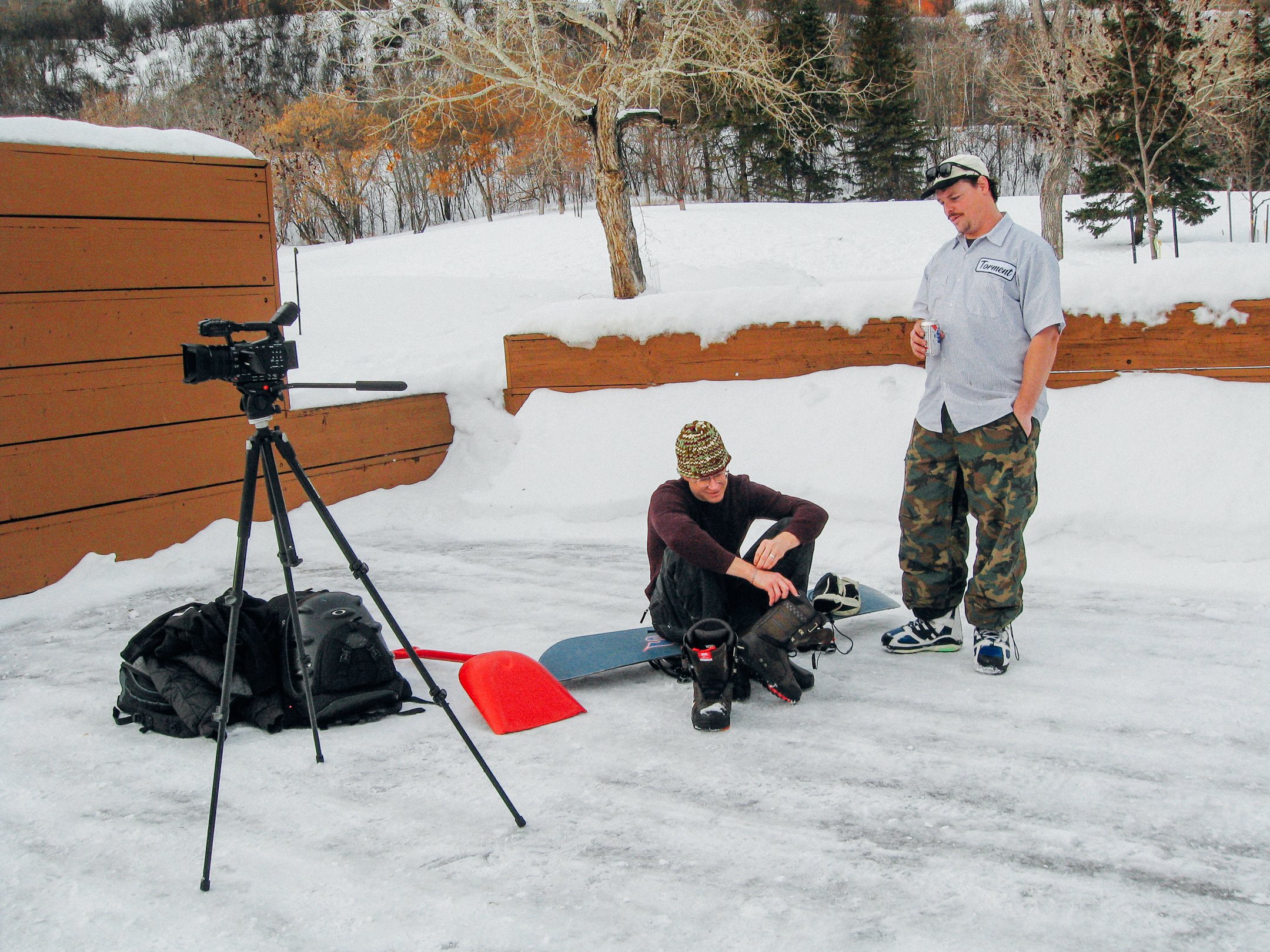
Will & Connor // p: Dale Bailey
This article was originally published in Pleasure #159. For the full reading experience, with some banger graphic design, more photos and the unmatched feel of a print magazine, order your copy of the latest magazine here, or, even better, support print by becoming a subscriber!